Core Motif
The self thins until something else is present: union described as marriage, annihilation, deification, or darkness.
Unio mysticaFana and baqaTheosisThe dark night
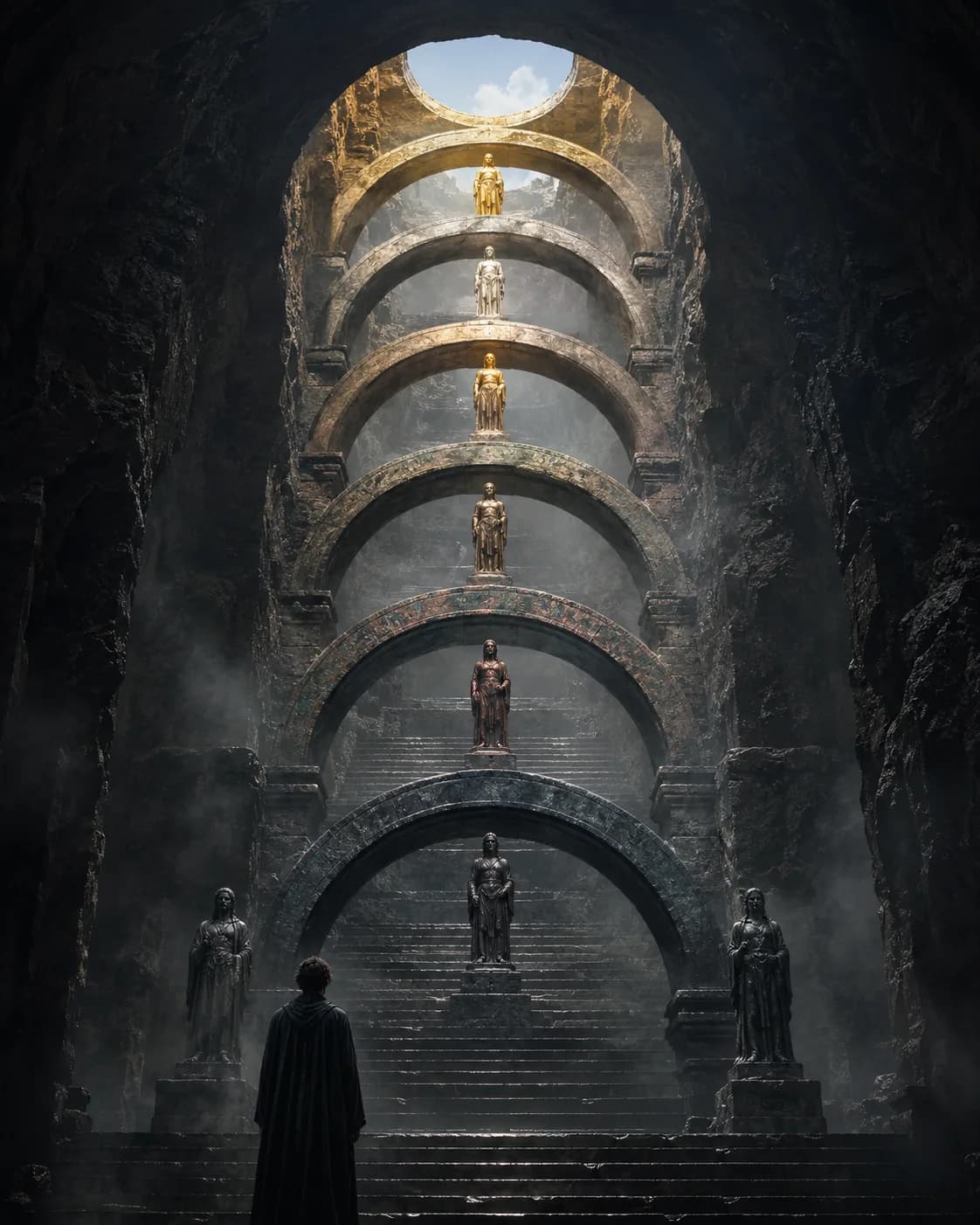
The Ascent
Disciplines of contemplative experience and union with ultimate reality.
The ladder, the seven gates, the graded spheres: the mystical literatures of very different traditions keep arriving at the same shape. Ascent is described far more often than arrival is.
Topic archive
A comparative dossier on union, annihilation, and the dark: what the contemplative literatures claim, where they agree, and where the agreement may be an illusion.
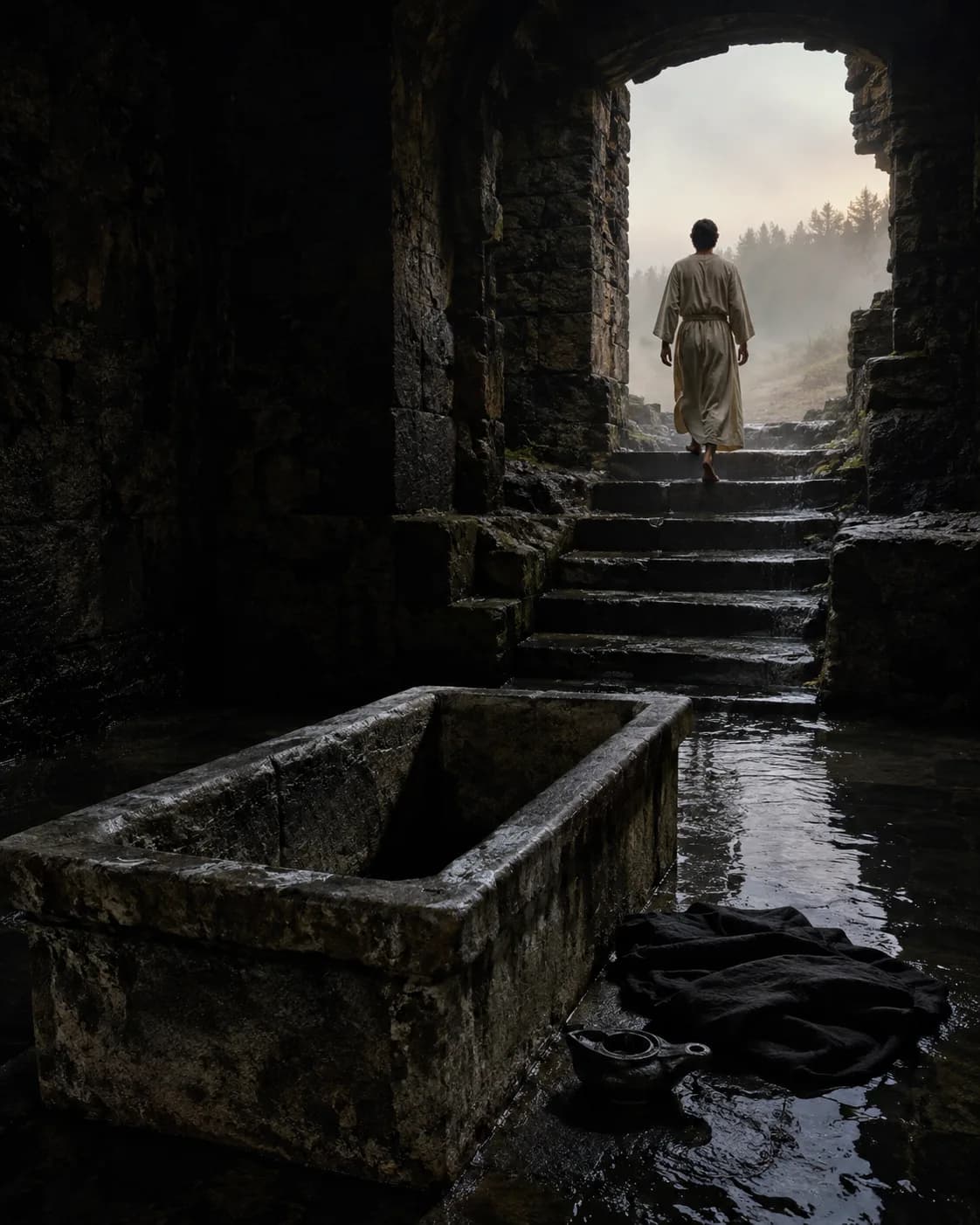
The Threshold
A comparative editorial path through Christian, philosophical, and esoteric sources.
Mysticism is a modern category laid over older practices: the word gathers together what Plotinus called henosis, the Sufis fana, the Kabbalists devekut, and the Christian contemplatives union — experiences of contact with, or absorption into, ultimate reality.
The literatures divide by method as much as by tradition. The cataphatic way climbs by images, names, and love; the apophatic way proceeds by subtraction — not this, not that — toward what Dionysius called the divine darkness. Most traditions keep both ladders in the same house.
Whether mystics of different traditions experience the same thing differently described, or different things shaped by their training, is the field's live quarrel — the perennialist and constructivist positions are both represented in this archive, and this page does not silently pick a side.
Initiation is repeatedly described as a death: the old garment left in the water, the walk out through the arch. What the accounts rarely supply is the part after — which may be the point, since the literature is written by people still walking.
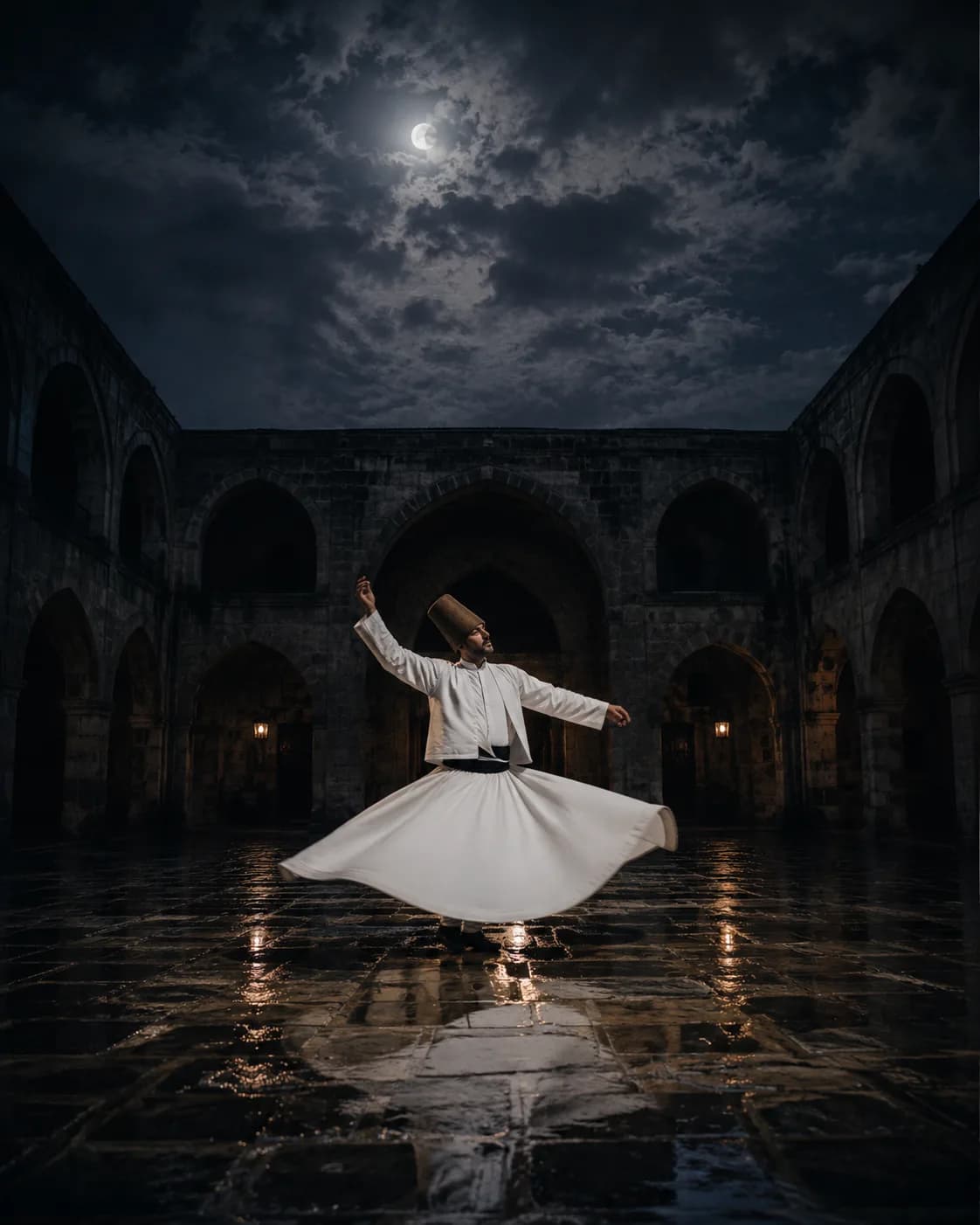
The Sama
Rumi's order made turning itself a prayer: the sama, in which the body becomes the orbit it contemplates. Most mystical literature describes stillness; the Mevlevis answered that the spheres are not still.
Dossier
Core Motif
The self thins until something else is present: union described as marriage, annihilation, deification, or darkness.
Two Ladders
Affirmation and negation as complementary ascents — images carried up, then left behind.
Aetherica Use
The topic gathers episodes on contemplative practice, the ascent literatures, and the modern study of extraordinary experience.
Cosmology / Metaphysics
Plotinus' return of the soul to the One — 'the flight of the alone to the Alone' — sets the grammar of ascent that Christian, Jewish, and Islamic mystics all inherit.
Stations of the Way
Representative Texts
A scanning view of the page's major systems, with each tradition kept distinct before deeper archive links, diagrams, and source notes are added.
| System | Period | Architecture | Texts |
|---|---|---|---|
| Neoplatonic henosis | 3rd-6th century | The One beyond being -> Emanation and return -> Purification, illumination, union -> Ecstasy as standing-out of self | Plotinus, Enneads, Porphyry, Life of Plotinus, Proclus, Elements of Theology |
| Christian apophatic tradition | c. 500-17th century | Via negativa -> Purgation, illumination, union -> The dark night of sense and spirit -> Union as marriage of the soul | Dionysius, Mystical Theology, The Cloud of Unknowing, John of the Cross, Dark Night of the Soul |
| Sufism | 8th century-present | Fana and baqa -> Dhikr, remembrance -> The stations and states -> Wahdat al-wujud, the unity of being | al-Hallaj, Diwan, Rumi, Masnavi, Ibn Arabi, Fusus al-Hikam |
| Jewish mysticism | 2nd century-present | Merkavah ascent -> Devekut, cleaving -> The sefirot as ladder -> Ecstatic and theosophical Kabbalah | Hekhalot literature, Zohar, Abulafia's handbooks |
| The modern study | 1902-present | Ineffability and noetic quality -> The mystic way as psychology -> Perennialism -> Constructivism | James, Varieties of Religious Experience, Underhill, Mysticism, Huxley, The Perennial Philosophy |
The vocabulary this dossier uses, with the register each definition belongs to. Terms the archive has spoken about link into transcript search; terms treated more fully on this page point there instead.
Latin
Greek
Greek
Arabic
Hebrew
Greek
Each period is drawn to its extent on one shared axis, so a three-hundred-year epoch runs three times the length of a hundred-year one. The boundaries are conventional rather than exact: a bar marks where the surviving evidence sits, not the year a tradition began or stopped. The empty stretches are part of the record — but a gap here means this dossier holds nothing in that interval, not that nothing happened in it.
204-270
204 CE – 270 CE
The Enneads describe the soul's return to its source in union beyond thought — Porphyry says his teacher attained it four times in the years he knew him. The vocabulary of Western mysticism starts here.
Fixed points
Gap · 270 CE – 500 CE · 230 years
c. 500
500 CE – 530 CE
The Mystical Theology — five short chapters — teaches ascent by negation into the 'brilliant darkness,' and hands every later Christian mystic both a method and an authority mistaken for apostolic.
Gap · 530 CE – 858 CE · 328 years
858-922
858 CE – 922 CE
The Sufi who said 'I am the Real' — ana al-Haqq — and was executed at Baghdad for it. His death becomes Sufism's cautionary and defining story: what annihilation in God means, and what it costs to say so aloud.
Fixed points
Gap · 922 CE – 1090 · 168 years
1090-1153
1090 – 1153
Bernard of Clairvaux preaches eighty-six sermons on the Song of Songs without leaving its first two chapters: mystical union read as marriage, and love made the engine of ascent for the medieval West.
Gap · 1153 – 1260 · 107 years
c. 1260-1361
1260 – 1361
Eckhart preaches the birth of God in the soul and the Godhead beyond God — in German, to nuns and townspeople; Tauler and Suso carry the teaching on after the papal condemnation of 1329.
In agro dominico (1329) condemned twenty-eight of Eckhart's propositions; he had died while the case was pending.
Fixed points
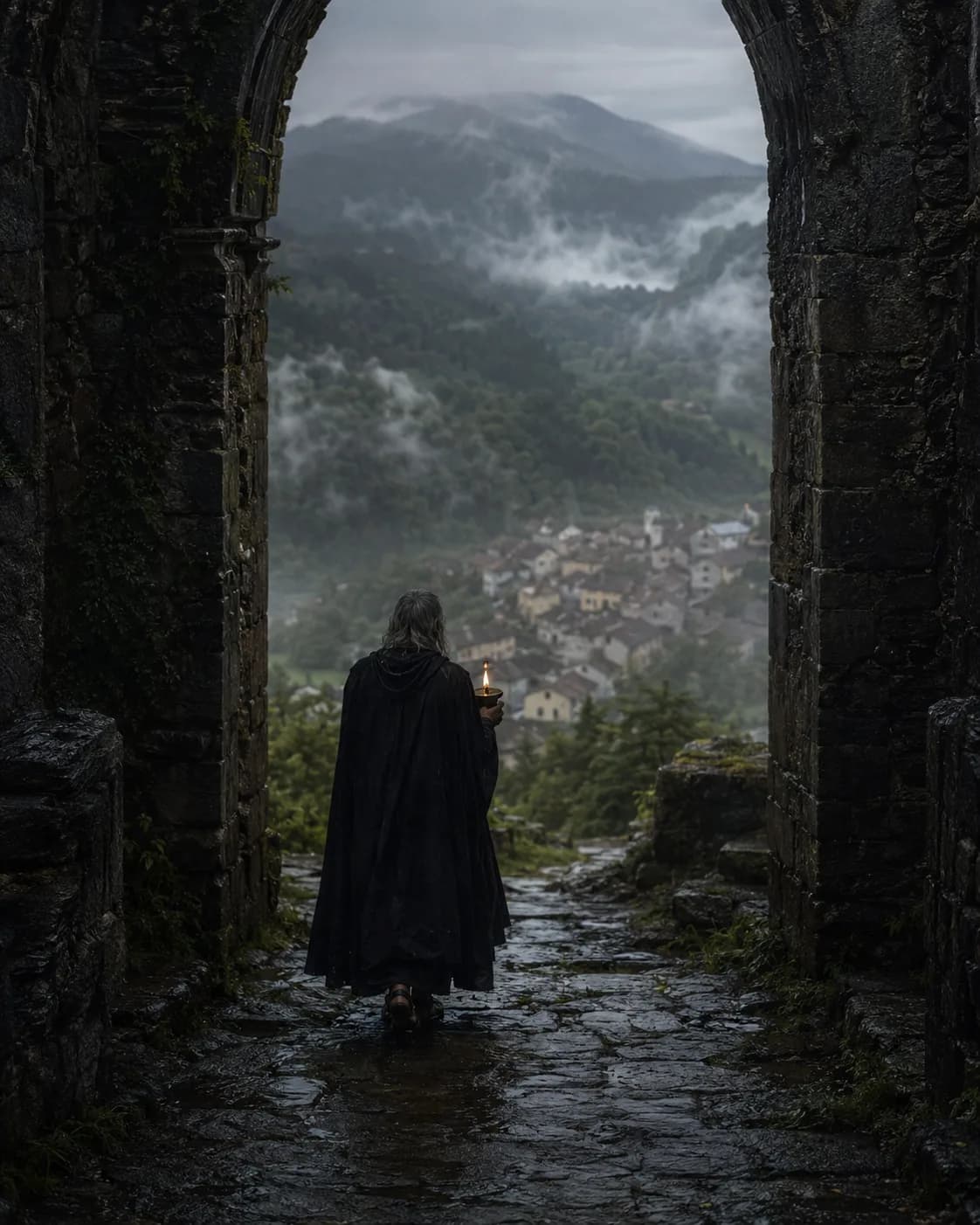
c. 1375
1375
An anonymous English director tells a young contemplative to put everything created under a 'cloud of forgetting' and beat on the cloud above with 'a sharp dart of longing love' — Dionysian negation turned into plain pastoral advice.
Gap · 1375 – 1515 · 140 years
1515-1591
1515 – 1591
Teresa of Avila maps the soul as a castle of seven dwelling places; John of the Cross charts the nights between them. Between them they give mystical progress its most systematic map — written under the Inquisition's eye.
Fixed points
1207-1273
1207 – 1273
Jalal al-Din Rumi meets Shams of Tabriz and grief becomes the Masnavi — and a practice: his Mevlevi order makes the turning body itself the prayer. Persian Sufism's high-water mark of union sung rather than argued.
Gap · 1591 – 1902 · 311 years
The interval holds no landmark in this dossier, not no mysticism: Quietism's condemnation, Hasidism's rise, and the Romantics' recoveries all fall between the Carmelites and James.
1902-1911
1902 – 1911
William James gives it four marks — ineffable, noetic, transient, passive — and Evelyn Underhill answers with a map of the whole mystic way. The academic study of mysticism begins as psychology and phenomenology at once.
Fixed points
Gap · 1911 – 1945 · 34 years
1945-1978
1945 – 1978
Huxley's Perennial Philosophy claims one summit behind every tradition's path; Zaehner distinguishes the summits; Katz's 1978 essay argues there is no unmediated experience at all. The field's central argument reaches its modern form.
Fixed points
1978-present
1978 – present
Neuroscience scans meditators, philosophers re-litigate constructivism, and the traditions keep producing practitioners — the conversation between laboratory, seminar, and monastery remains unresolved and productive.
204-270
The philosopher of the One, whose account of union set the terms for three religions' mystical literatures.
c. 500
Author of the Mystical Theology; the divine darkness and the negative way descend from these few pages.
858-922
Sufism's martyr of union, executed for saying aloud what the tradition holds can only be undergone.
c. 1260-1328
The Rhineland's boldest voice: the birth of God in the soul, preached in the vernacular and condemned at Avignon.
1207-1273
Persian Sufism's greatest poet; the Masnavi and the turning order both descend from his grief for Shams.
1515-1582
Cartographer of the Interior Castle and reformer whose accounts of union are precise enough to be argued with.
1542-1591
Poet of the dark night: the map of what contemplative progress feels like when it feels like nothing.
1875-1941
Her 1911 Mysticism organized the whole field — awakening, purgation, illumination, dark night, union — for a century of readers.
Neoplatonic
Plotinus' collected treatises; the final tractates describe union with the One directly.
Christian apophatic
Dionysius' five chapters on the ascent into darkness — the negative way's charter.
English contemplative
Anonymous fourteenth-century direction in the apophatic way, still in practical use.
Carmelite
Teresa's seven dwelling places — the most systematic first-person map of the mystic way.
Carmelite
John of the Cross on the purifications that feel like abandonment; the phrase every later writer borrows.
Sufi
Rumi's six books of teaching poetry — 'the Quran in Persian' — union sung in ten thousand couplets.
Modern study
James' 1902 lectures; the four marks of mystical experience begin the field's modern vocabulary.
This dossier is an Aetherica editorial research layer. It is designed to support deeper pages, archive search, future bibliographies, and interactive diagrams. Historical claims, symbolic readings, and modern esoteric interpretations should remain clearly labeled as the library expands.
Continue