Core Motif
Rite completes what reasoning begins: the soul is raised by symbols planted in matter and in itself.
Synthemata and symbolaAscent of the soulDivine names and lightPrayer as participation
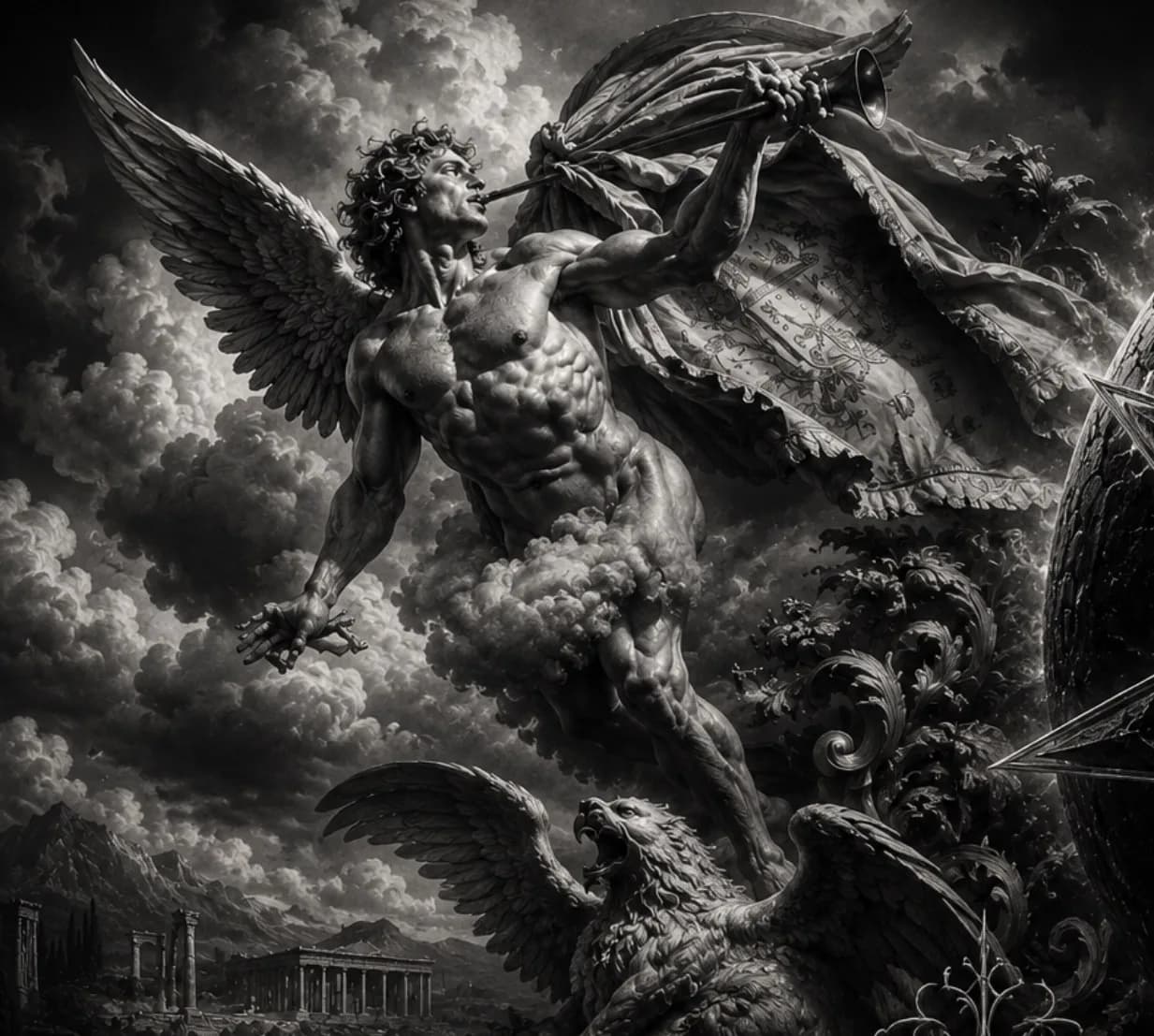
Θεουργία
Sacred ritual philosophy oriented toward divine participation.
Iamblichus argued against Porphyry that the gods are not reached by reasoning alone. Theurgy is divine work — action in which the soul participates rather than merely contemplates.
Topic archive
A dossier on divine work: the Chaldean Oracles, the Neoplatonic defense of rite, and the long argument over how the soul is raised.
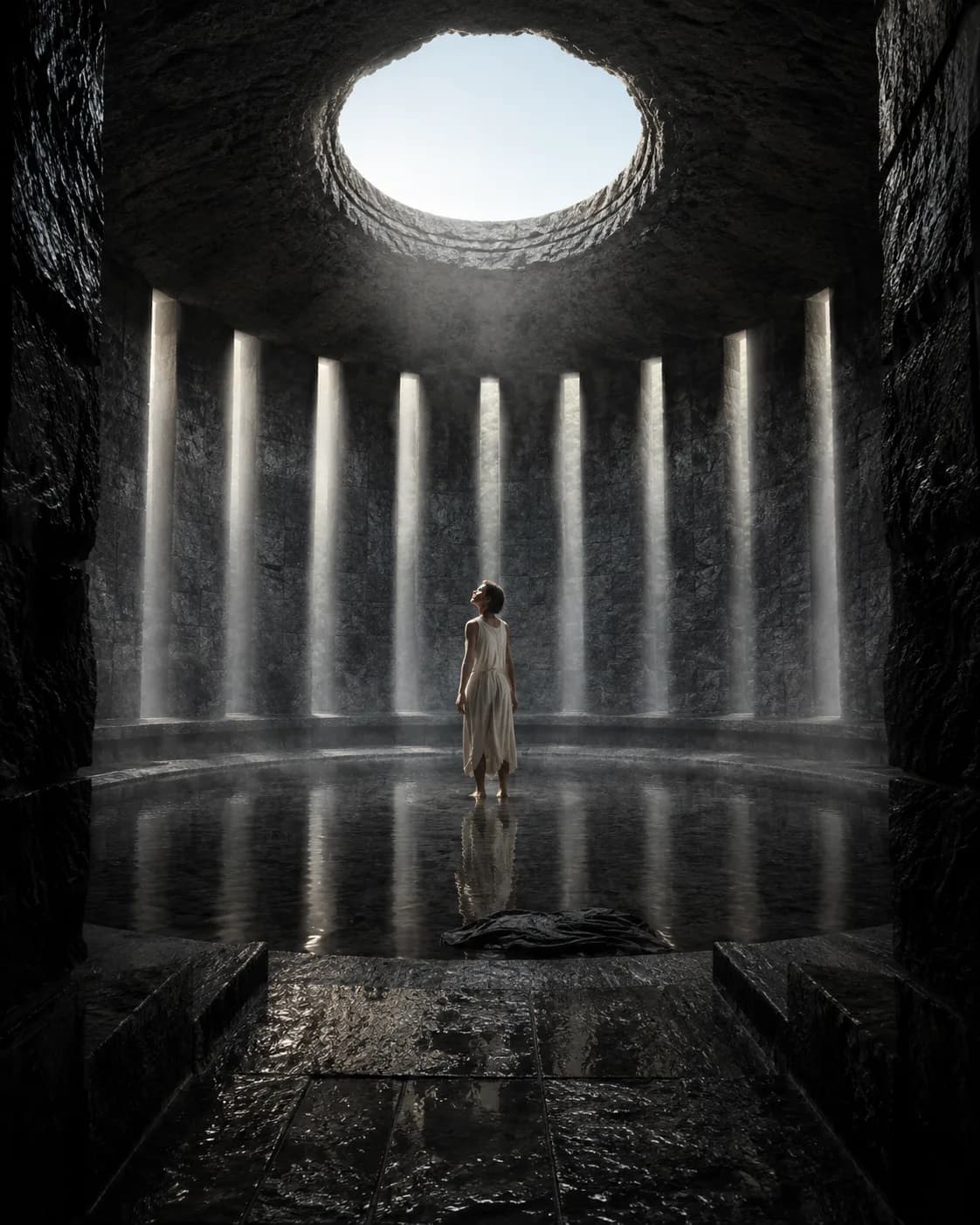
Photagogia
Episodes gather ancient, late antique, and Christian mystical approaches to sacred action.
Theurgy — theourgia, god-work — names the late-antique ritual tradition in which the divine is not merely discussed but engaged: rites, names, and consecrated symbols through which, its defenders insisted, the gods themselves act on the soul.
Its scripture is the Chaldean Oracles; its defining argument is the exchange between Porphyry, who doubted that rite could do what reasoning could not, and Iamblichus, whose De Mysteriis answers that the gods are not moved by human craft but reach down through tokens they themselves have sown.
The page keeps the Chaldean current, the Iamblichean defense, the Athenian synthesis, and the Christian and Renaissance transpositions distinct — the word travels further than any one of its theologies.
Iamblichus calls one mode of the work photagogia — the leading-in of light. What the rite promises is not information but illumination: the initiate stands where the light falls, and is changed by standing there.
Dossier
Core Motif
Rite completes what reasoning begins: the soul is raised by symbols planted in matter and in itself.
The Debate
Porphyry's questions and Iamblichus' answer frame everything that follows.
Aetherica Use
The topic gathers episodes on Iamblichus, Neoplatonism, ritual philosophy, and the western reception of god-work.
Cosmology / Metaphysics
The hexameter Oracles attributed to the two Julians: fire and light mysticism with a liturgy of ascent, known now only in fragments.
Ritual Architecture
Representative Texts
A scanning view of the page's major systems, with each tradition kept distinct before deeper archive links, diagrams, and source notes are added.
| System | Period | Architecture | Texts |
|---|---|---|---|
| Chaldean current | 2nd century CE | The Paternal Intellect -> Hecate as life-giving membrane -> Iynges, Connectors, Teletarchs -> The flower of the mind | Chaldean Oracles (fragments) |
| Iamblichean theurgy | c. 245-325 | Synthemata sown in matter -> The scale of gods, angels, daimones, heroes, souls -> Rite matched to the soul's rank -> Theurgy above theology | Iamblichus, De Mysteriis, On the Soul (fragments) |
| Athenian school | 5th-6th century | Henads -> Chains (seirai) of sympathy -> Telestike, the consecration of statues -> Prayer according to rank | Proclus, On the Hieratic Art, Proclus, Hymns, Platonic Theology |
| Christian transposition | c. 485-530 | Celestial hierarchy -> Ecclesiastical hierarchy -> Divine darkness -> Sacrament as god-work | Pseudo-Dionysius, Celestial Hierarchy, Ecclesiastical Hierarchy, Mystical Theology |
| Renaissance and modern revivals | 15th century-present | Astral spiritus -> Ceremonial 'theurgy' of the orders -> Academic recovery of Iamblichus | Ficino, De vita coelitus comparanda, Shaw, Theurgy and the Soul |
The vocabulary this dossier uses, with the register each definition belongs to. Terms the archive has spoken about link into transcript search; terms treated more fully on this page point there instead.
Greek
Greek
Greek
Greek
Greek
Greek
Each period is drawn to its extent on one shared axis, so a three-hundred-year epoch runs three times the length of a hundred-year one. The boundaries are conventional rather than exact: a bar marks where the surviving evidence sits, not the year a tradition began or stopped. The empty stretches are part of the record — but a gap here means this dossier holds nothing in that interval, not that nothing happened in it.
2nd century
150 CE – 200 CE
Hexameter oracles attributed to Julian the Chaldean and his son Julian the Theurgist: a revealed cosmology of fire and light with a rite of ascent. Later Platonists treat them as scripture.
The attribution, and the collection's unity, are contested; the text survives only through quotation by later Neoplatonists.
Fixed points
Gap · 200 CE – 260 CE · 60 years
c. 260-305
260 CE – 305 CE
The Letter to Anebo assembles the rationalist case against rite: why should gods need sacrifice, respond to names, or be reached through matter at all?
c. 280-325
280 CE – 325 CE
Writing as the priest Abamon, Iamblichus replies that theurgy is not human craft working on the gods but the gods working through tokens they planted — rite reaches what argument alone cannot.
Gap · 325 CE – 361 CE · 36 years
361-363
361 CE – 363 CE
The emperor Julian, formed by Iamblichean teachers, briefly makes theurgic Hellenism the empire's religion; his death in Persia ends the experiment.
Fixed points
Gap · 363 CE – 437 CE · 74 years
437-529
437 CE – 529 CE
Proclus heads the Academy and threads theurgy through systematic Platonism — hymns, the hieratic art, prayer graded to the soul's rank — until Justinian closes the school.
Fixed points
c. 485-530
485 CE – 530 CE
A Christian writing under the name of Paul's Athenian convert reworks Proclean ranks into celestial and ecclesiastical hierarchy: 'theurgy' becomes the divine work carried in sacrament.
Gap · 530 CE – 1018 · 488 years
The interval is custody rather than practice: Byzantine copyists and commentators keep the texts legible while the rite itself has no institution.
11th century
1018 – 1078
Michael Psellos reads, excerpts, and criticizes the Chaldean material; his summaries carry much of what survives of the Oracles toward the West.
Gap · 1078 – 1440 · 362 years
15th-16th century
1440 – 1600
Plethon's recension of the Oracles reaches Italy; Ficino reads Iamblichus and softens theurgy into the astral medicine of De vita — respectable, Christianized, and deliberately less than its source.
Fixed points
Gap · 1600 – 1875 · 275 years
1875-1956
1875 – 1956
Theosophy, the Golden Dawn, and their successors adopt 'theurgy' for ceremonial work — a genuine reception, but one whose ritual grammar is early modern rather than late antique.
1956-present
1956 – present
Where an earlier generation dismissed theurgy as superstition grafted onto Platonism, Lewy's study and Shaw's Theurgy and the Soul re-read it as serious religion: embodied Platonism rather than its betrayal.
Fixed points
2nd century
Reputed co-author of the Chaldean Oracles, the hexameter revelation later Platonists treated as scripture.
c. 234-305
Plotinus' editor and the tradition's indispensable critic: his Letter to Anebo provoked its defining defense.
c. 245-325
Author of De Mysteriis: rite over unaided reasoning, and the philosophical architecture the whole tradition stands on.
331-363
The emperor whose brief pagan restoration made Iamblichean theurgy, for two years, an imperial religion.
412-485
Systematized theurgy inside the Platonic curriculum: hymns, the hieratic art, and chains of sympathy.
c. 500
Carried hierarchic theurgy into Christian sacramental theology under an apostolic name.
1018-c. 1078
Byzantine polymath whose excerpts and critiques preserve much of the Chaldean material.
Chaldean
The theurgists' scripture, surviving as fragments in Neoplatonic quotation: fire, light, and the soul's ascent.
Critique
The rationalist questionnaire on sacrifice, divination, and divine names that the whole tradition answers.
Iamblichean
The Reply of Abamon: why the gods act through rite, and why theurgy stands above theology.
Athenian
The short treatise on sympathy: heliotrope, lotus, cock, and stone as links in divine chains.
Imperial
The emperor's solar theology: Iamblichean metaphysics as public religion.
Christian transposition
Angelic ranks and sacramental ascent — Proclean architecture inside the church.
This dossier is an Aetherica editorial research layer. It is designed to support deeper pages, archive search, future bibliographies, and interactive diagrams. Historical claims, symbolic readings, and modern esoteric interpretations should remain clearly labeled as the library expands.
Continue