Core Motif
The soul awakens from ignorance and remembers a higher origin.
Gnosis as salvific knowledgeAlienation from the lower worldReturn to the divine fullnessMyth as metaphysical diagram

Gnosis
A family of ancient currents centered on gnosis, cosmic exile, aeons, archons, and awakening.
The Sethian and Valentinian myths both turn on a rupture in the fullness — a break in the Pleroma that the whole cosmos is arranged around. What is held here is not unbroken; it is mended, and the mend is visible.
Topic archive
A comparative dossier on gnosis, aeonology, mythic cosmology, and the drama of awakening.
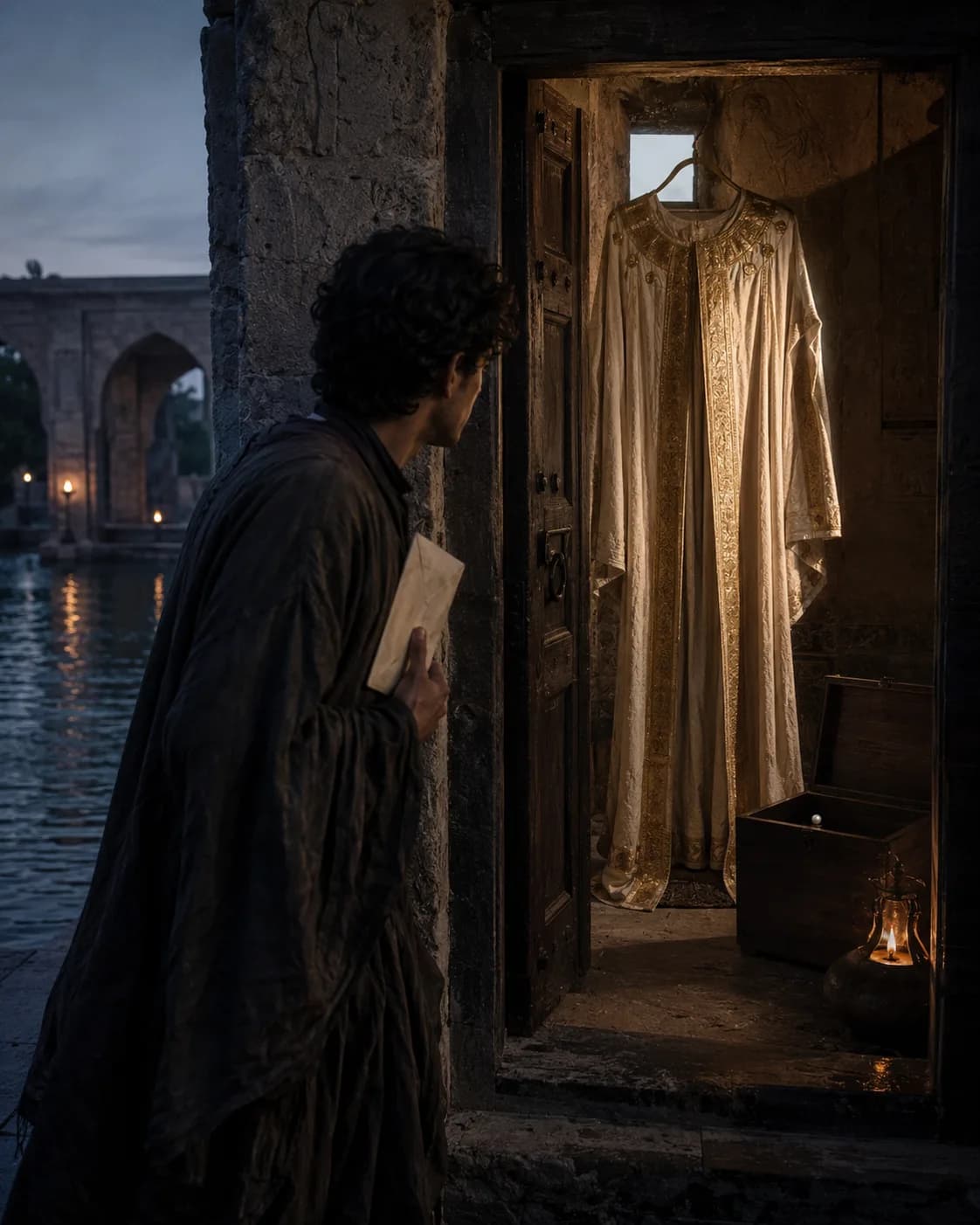
The Robe of Glory
Aetherica approaches Gnosticism as a complex field of texts, sects, mythic cosmologies, and later esoteric receptions rather than a single doctrine.
Gnosticism is best approached as a family of ancient religious and philosophical currents rather than a single church or doctrine.
Its systems often describe the soul as exiled, asleep, or entangled in a lower cosmos, and salvation as awakening through gnosis: direct, transformative knowledge of divine origin.
The page distinguishes ancient sects, source texts, mythic cosmologies, and later esoteric receptions so they are not silently blended together.
The Hymn of the Pearl: a prince sent down to Egypt for a pearl forgets who he is, until a letter from home wakes him. The robe he left behind has kept the shape of the self he had forgotten — the return is not to a place but to a fit.
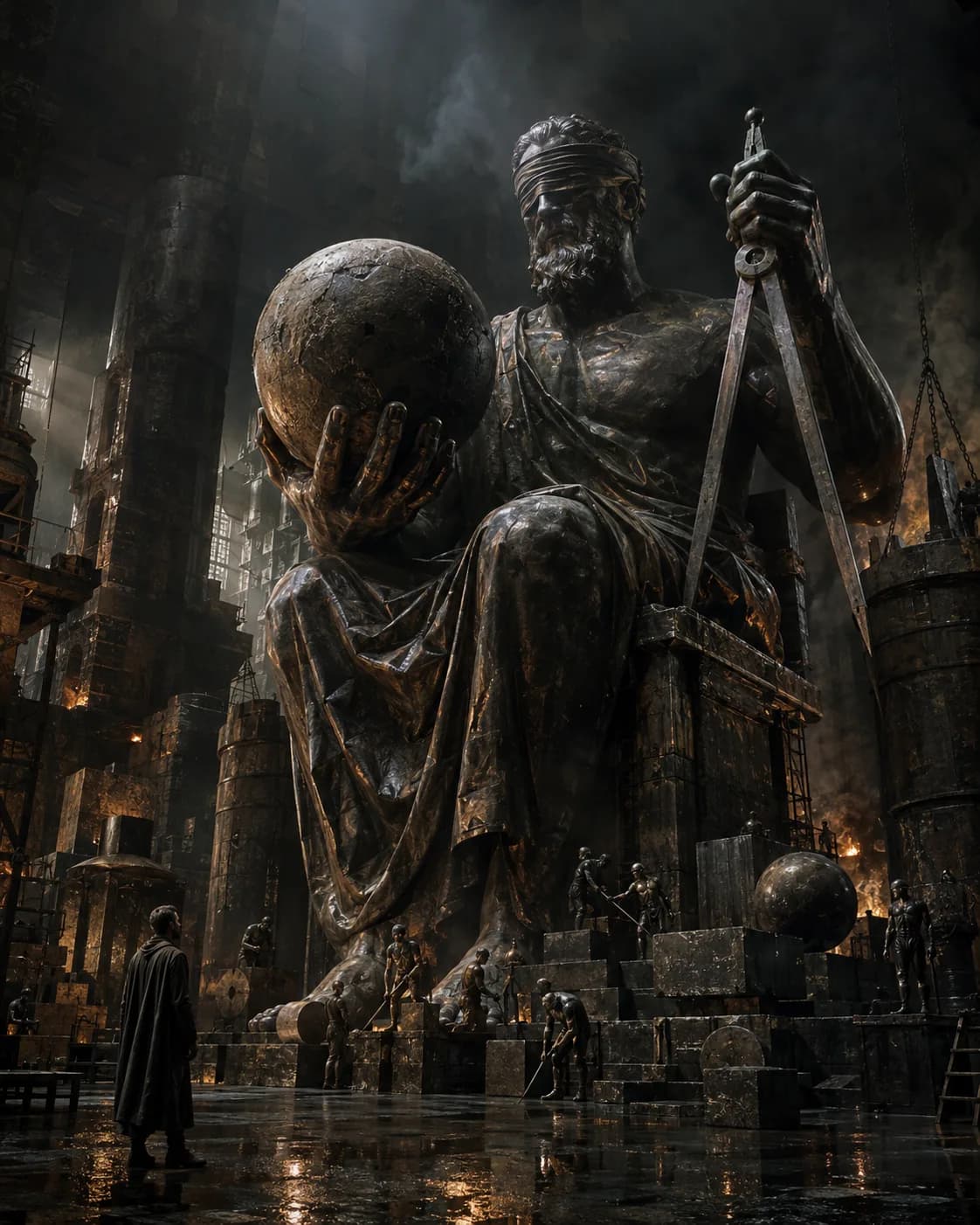
The Blind Craftsman
The Apocryphon of John calls the world-maker blind — a craftsman who cannot see what stands above his own throne and so mistakes himself for the whole of God. The cosmos is real work, done in earnest; the error is in the attribution.
Dossier
Core Motif
The soul awakens from ignorance and remembers a higher origin.
Cosmic Drama
Many systems narrate a rupture between the divine fullness and the fashioned cosmos.
Aetherica Use
The topic connects episodes on archons, demiurgy, the soul, divine names, initiation, and the interpretation of myth.
Cosmology / Metaphysics
A mythic system centered on heavenly ascent, the seed of Seth, Barbelo, aeonic emanation, and the soul's liberation from archonic rule.
Aeonology / Cosmological Architecture
Representative Texts
A scanning view of the page's major systems, with each tradition kept distinct before deeper archive links, diagrams, and source notes are added.
| System | Period | Architecture | Texts |
|---|---|---|---|
| Sethian currents | 2nd-4th century | Invisible Spirit -> Barbelo as primal aeon -> Pleroma of emanated aeons -> Sophia's rupture | Apocryphon of John, The Holy Book of the Great Invisible Spirit, Zostrianos |
| Valentinian schools | 2nd-3rd century | Bythos or primal depth -> Syzygies of aeons -> Sophia's passion -> Formation of psychic and material orders | Gospel of Truth, Tripartite Tractate, Excerpts of Theodotus |
| Basilidean tradition | 2nd century | Transcendent unbegotten source -> Layered heavens -> Cosmic rulers -> Ignorance and revelation | Fragments of Basilides, Reports in Irenaeus, Reports in Hippolytus |
| Thomasine and wisdom Christianity | 1st-3rd century | Kingdom within and without -> Self-knowledge -> Hidden sayings -> Living Jesus as revealer | Gospel of Thomas, Book of Thomas the Contender, Dialogue of the Savior |
| Manichaean religion | 3rd century onward | Two principles -> Light and darkness -> Mixture in the world -> Cosmic rescue of light particles | Kephalaia, Manichaean Psalm-Book, Shabuhragan fragments |
The vocabulary this dossier uses, with the register each definition belongs to. Terms the archive has spoken about link into transcript search; terms treated more fully on this page point there instead.
Each period is drawn to its extent on one shared axis, so a three-hundred-year epoch runs three times the length of a hundred-year one. The boundaries are conventional rather than exact: a bar marks where the surviving evidence sits, not the year a tradition began or stopped. The empty stretches are part of the record — but a gap here means this dossier holds nothing in that interval, not that nothing happened in it.
1st century
1 CE – 130 CE
Apocalyptic, wisdom, baptismal, Platonic, and early Christian currents create the symbolic world in which later Gnostic myth develops.
2nd-3rd century
120 CE – 260 CE
Sethian, Valentinian, Basilidean, and related currents develop elaborate myths of emanation, fall, archons, and return.
Fixed points
c. 180
180 CE
Irenaeus and other polemicists preserve hostile but important evidence for ancient Gnostic teachers and schools.
216-277
216 CE – 277 CE
Manichaeism turns a Gnostic-style light-dark cosmology into a transregional religious movement, carried in time from the Atlantic to the China coast.
Fixed points
4th-5th century
300 CE – 450 CE
Imperial Christianity and anti-heretical law marginalize the Gnostic communities, while their texts survive in Coptic translation and buried libraries.
Fixed points
Gap · 450 CE – 1945 · 1495 years
Fifteen centuries in which the tradition speaks almost only through its enemies — with genuinely Gnostic currents surfacing at the margins: Manichaeism's long afterlife eastward, the Paulicians, the Bogomils, and the Cathar problem the historians still argue over.
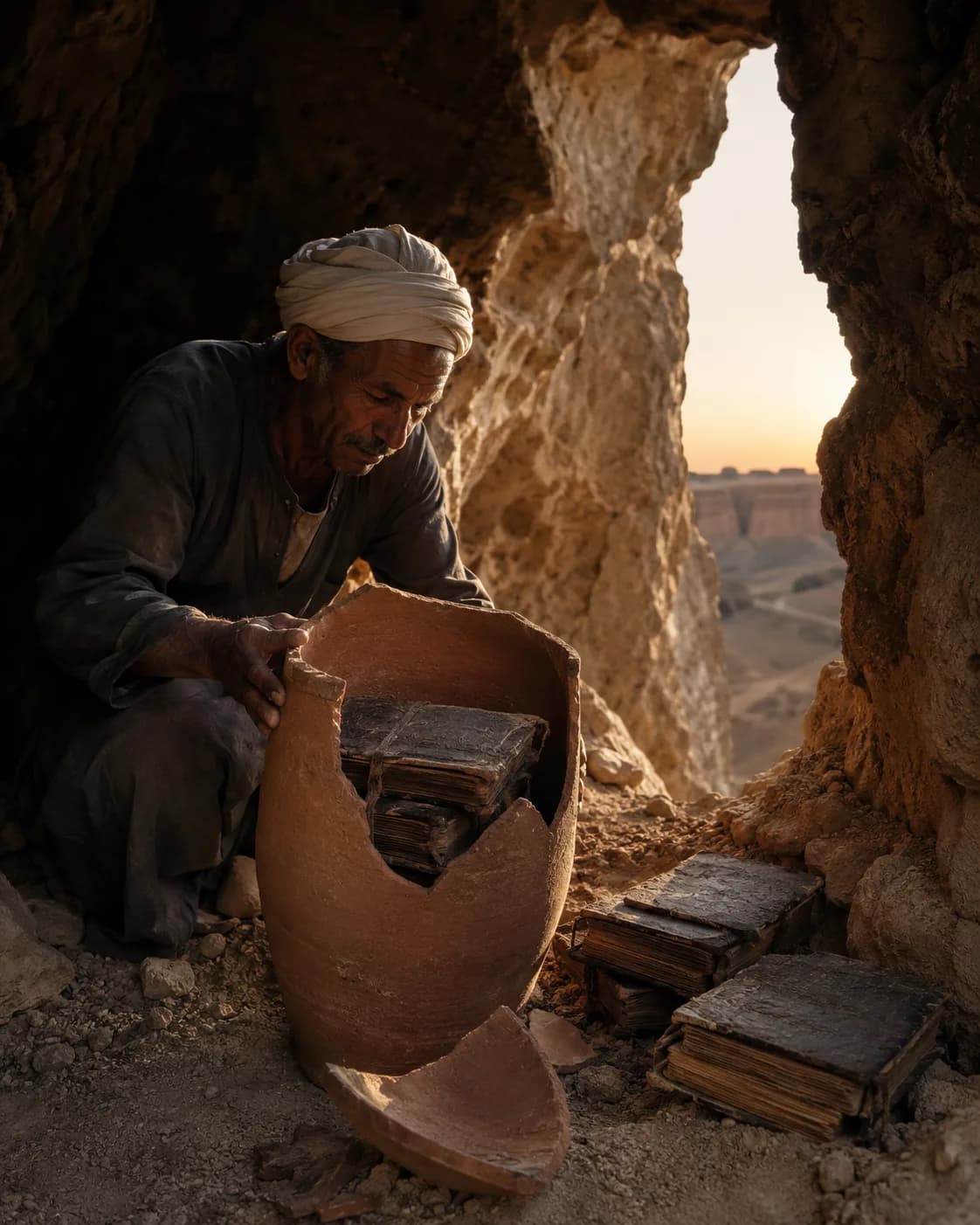
1945
1945
A major cache of Coptic codices transforms modern study by giving direct access to texts beyond hostile summaries.
1945-present
1945 – present
Gnostic materials enter comparative religion, depth psychology, esotericism, and modern spiritual discourse, sometimes carefully and sometimes loosely.
Fixed points
c. 100-160
A major Christian Gnostic teacher whose school shaped one of the most sophisticated aeonic systems.
2nd century
Alexandrian teacher associated with complex cosmological speculation and layered heavens.
216-274
Founder of Manichaeism, a world religion with a powerful cosmology of light, darkness, and liberation.
c. 130-202
A critic whose reports preserve important, though polemical, information about early Gnostic groups.
204-270
Neoplatonic philosopher who criticized Gnostic movements while sharing parts of their late antique intellectual world.
1903-1993
Modern scholar whose existential interpretation shaped twentieth-century readings of Gnosticism.
Sethian
One of the clearest mythic accounts of emanation, Sophia, the Demiurge, archons, and awakening.
Valentinian
A meditative homily on ignorance, error, revelation, and return to the Father.
Valentinian-adjacent
A symbolic and sacramental text with bridal chamber, image, and mystery language.
Valentinian
A detailed theological treatise on emanation, fall, formation, and restoration.
Sethian-adjacent
A mythic retelling of Genesis through archonic powers and spiritual awakening.
Later Gnostic
An elaborate post-resurrection dialogue with ascent, repentance, aeons, and cosmic orders.
Heresiological source
A hostile source that must be read critically but remains historically important.
This dossier is an Aetherica editorial research layer. It is designed to support deeper pages, archive search, future bibliographies, and interactive diagrams. Historical claims, symbolic readings, and modern esoteric interpretations should remain clearly labeled as the library expands.